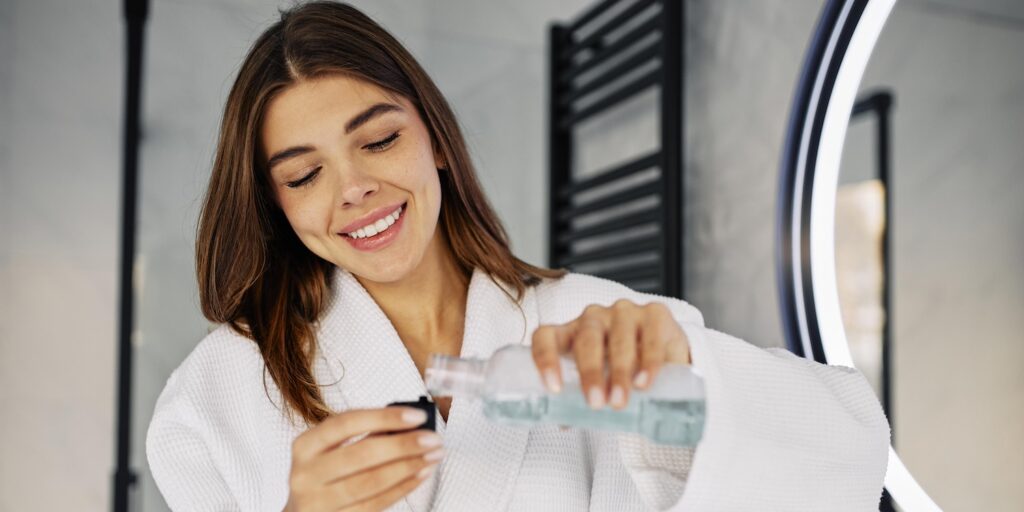
There are many types of mouthwash on the market, but how do you know which one is right for you? Each one targets a specific issue and it can be tricky to choose with so many options. This list will give you more insight into the varying categories and help you decide what fits your needs.
Most people are under the misconception that alcohol mouthwash is the only kind on the grocery store shelves. Even though it is the most common there are many other options available to you.
Alcohol
This is the most common type of mouthwash. Most alcohol mouthwashes are used by people to remove bacteria. It is also used by people who have halitosis and bad breath. It is combined with proper brushing and flossing techniques to void off stinky breath and infection. We advise using this type of mouthwash only when necessary because it can cause teeth discoloration.
Alcohol-Free
Alcohol-free mouthwash provides similar oral benefits to an alcohol-based product. Consider a mouthwash with CPC (cetylpyridinium chloride). This ingredient is found in many healthcare items and is safe and effective. In mouthwash, it binds to the surface of germs and causes them to burst, which reduces buildup.
Fluoride
Fluoride mouthwash contains sodium fluoride which is meant to help protect your teeth from cavities, acids, and tooth decay. It is not a substitute for brushing and flossing. Since fluoride can be found in most water supplies and toothpaste we advise only using this mouthwash when prescribed. Too much fluoride can be bad for your overall health.
Cosmetic
Cosmetic mouthwash is not meant to help prevent any type of dental issue. It is simply used to freshen your breath or prevent bad breath temporarily. It does not have any chemical or biological application beyond its temporary benefit.
Natural
Natural mouthwash has the advantage of doing what other oral rinses do, but with fewer harmful components. Their ingredients are considered safe and less harsh on the mouth than other oral rinses. Often this product can be made at home, but talk to your dentist before attempting.
Things to Remember
- Children under 6 are not recommended to use mouthwash unless advised by your dentist. It can be accidentally swallowed, which can be harmful.
- Look for a mouthwash with the ADA seal of acceptance. A company earns the seal by providing scientific research to help support the safety and effectiveness of their products
- Using mouthwash does not take the place of brushing and flossing
- It should only be used when needed
- Talk to your dentist about what mouthwash is right for you and your oral care
If you have any more questions, we’re here to help. Schedule an appointment at Beall Dental Center!